ID: F.AR.2.048
Name: Vollgratteen
Sub Order: Silent and Stern,
With a thrash of quill it does learn.
Come quiet in turn,
Come harrowing is it violent,
Patience, patience, now say your nocturn
Class: Taria
Sub Class: N/A
Order: Carnfor
Group: Wolf
Sub Group: N/A
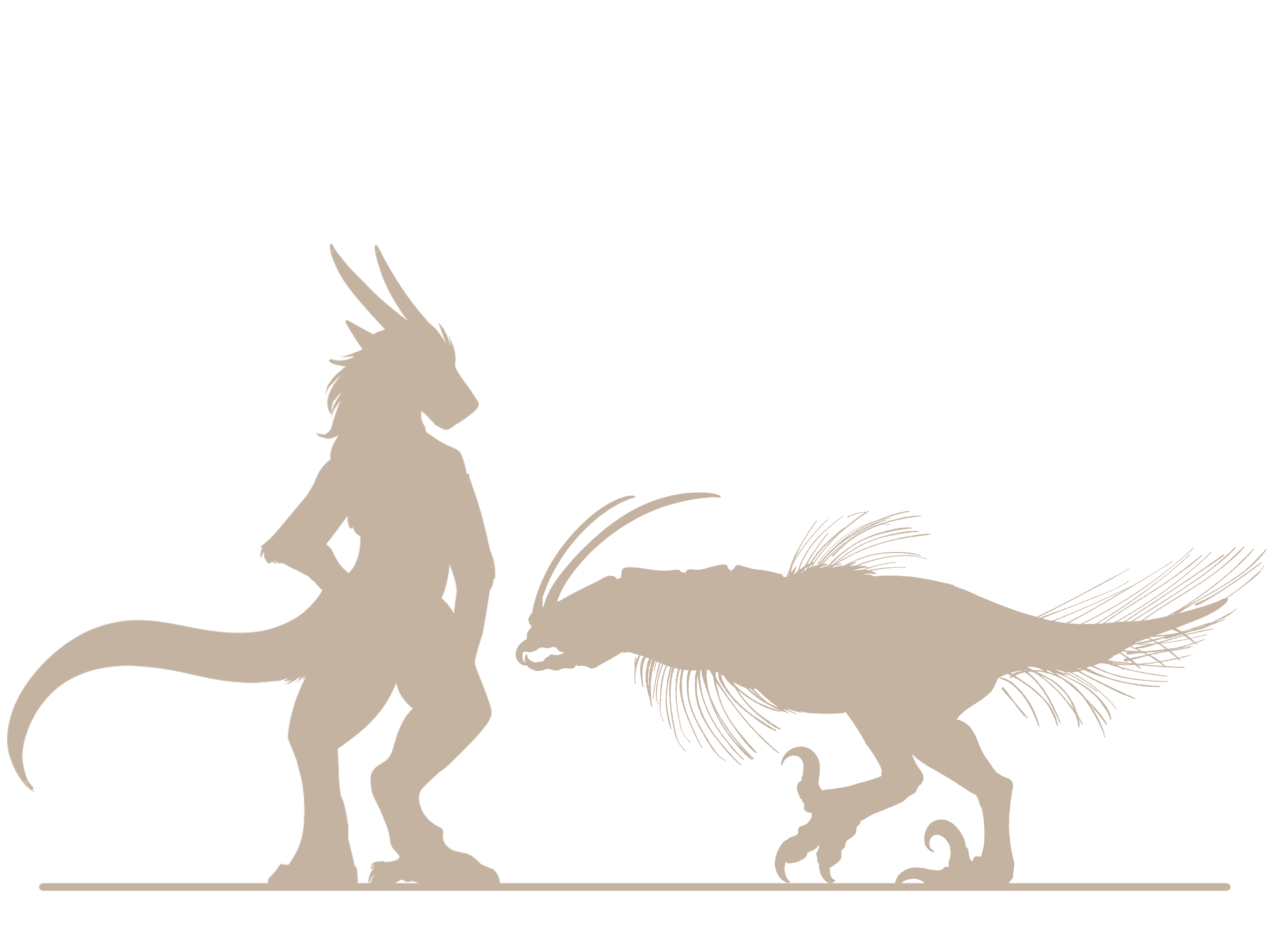
Height: 5-6ft
Weight: 600-1000llbs
Related Species:
Range
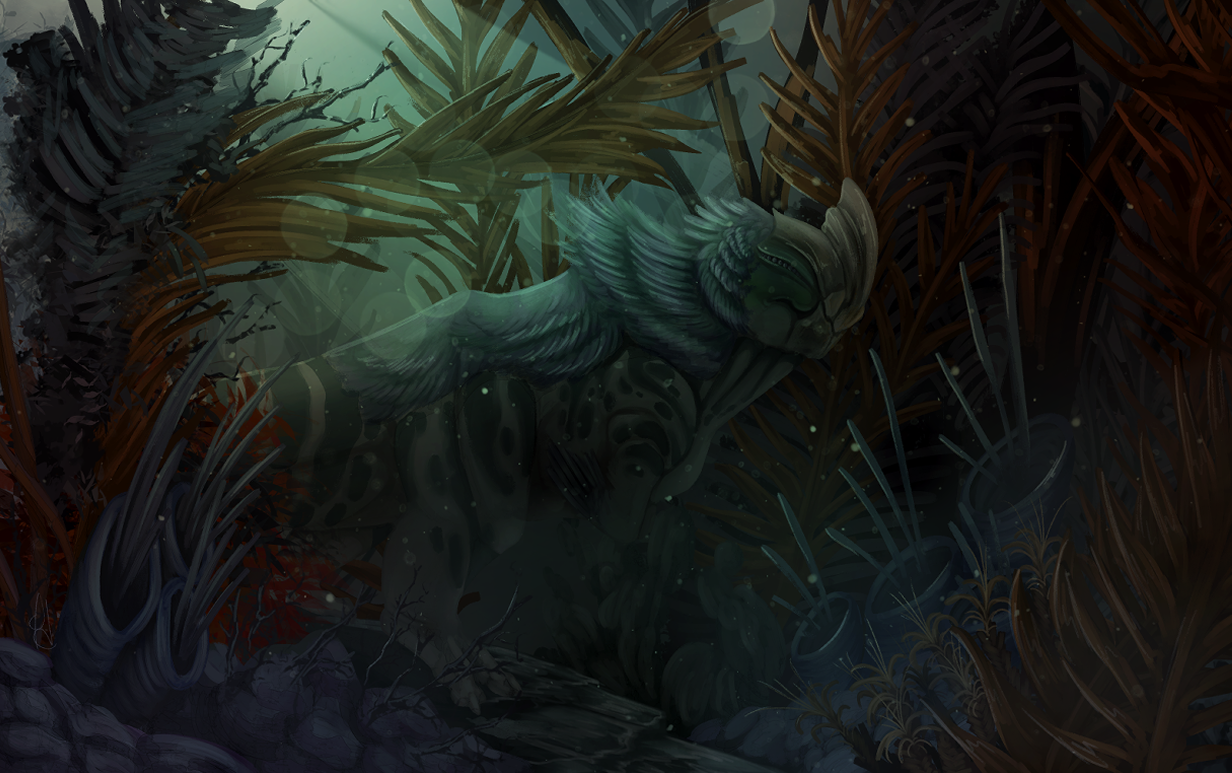
Vollgratteen inhabit the Lulnlayer
Vollgratteen
Overview
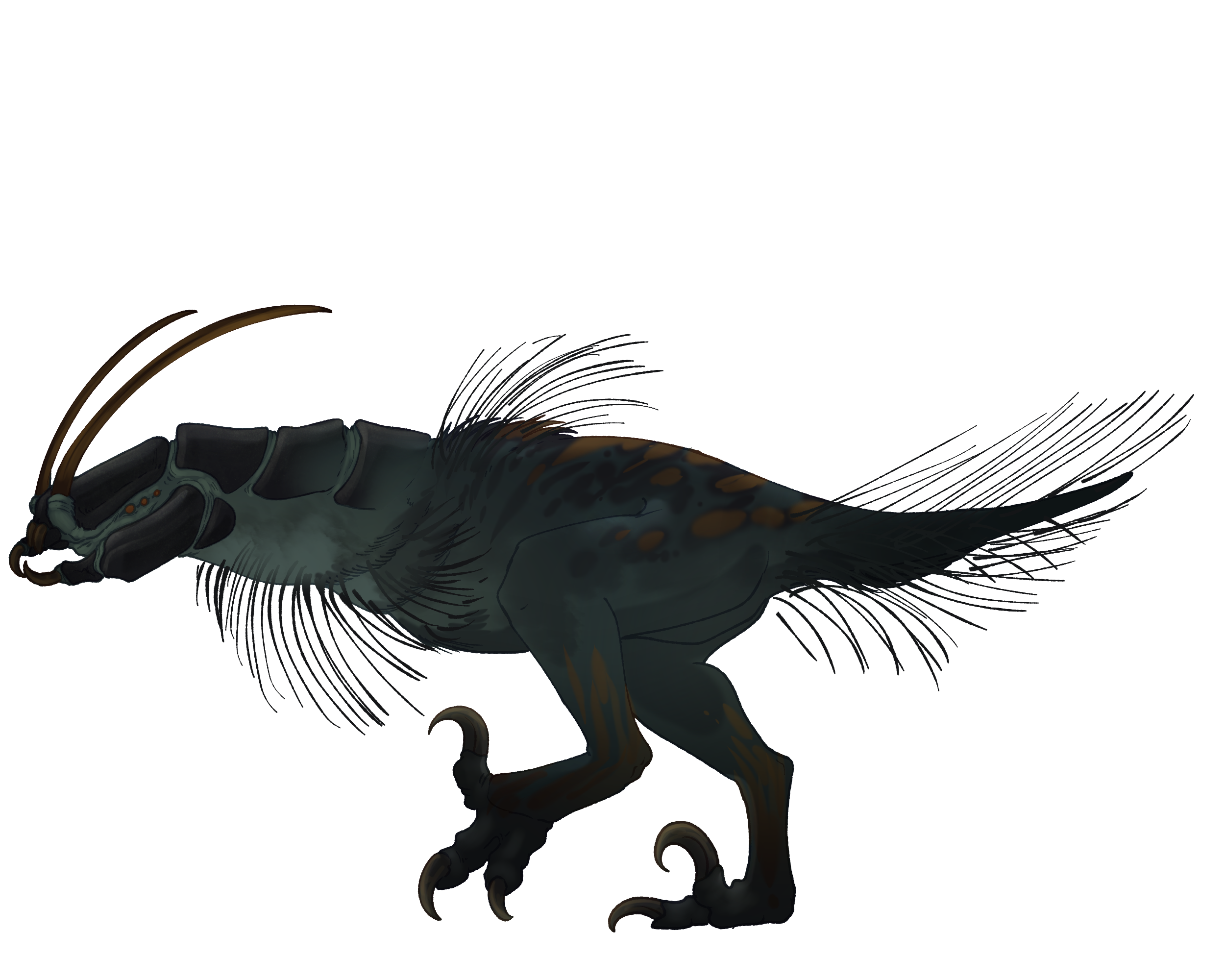
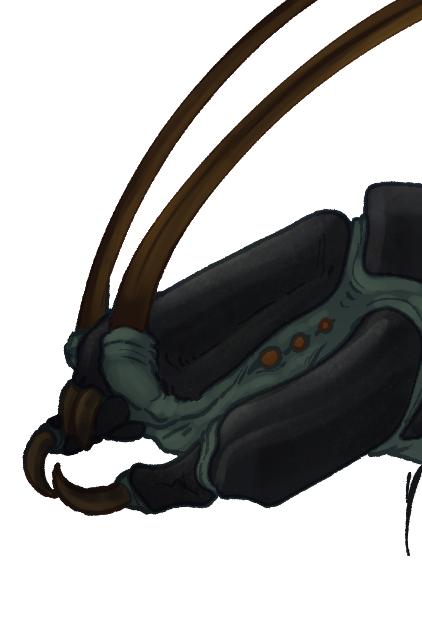
Prime hunter of the Lulnlayer. Nothing is safe from its grasping mandibles and hooked talons. Almost nothing is spared their wrath. Sensitive quills tipped with sensing micro organs. They will raise high or lay flat, and can rattle in a threat display. The extended quills help the animal locate and sense changes in air pressure, wind changes, humidity, and micro movements within the environment. Giving the Vollgratteen a wide range of “sight”. The antennae present on their face work similarly in turn. Sensing changes but on a lower scale. While being used as mating and affection displays. Moving in pairs of four to two. In large prey hunts, one Vollgratteen will harass Danse Mailtail. Using the armored plates on its head and neck to tease and taunt a swinging tail. The Vollgratteen will not tease or taunt too close, it only wishes to deflect clipping blows, not glancing ones. While the tail is distracted, the rest of the pack closes in on an unguarded front. Risking crushing bites but should they bleed out the Mailtail. They can take it down. Striking with fangs and talons. In small prey hunts, the Vollgratteen will strike fast and hard. Overwhelming all at once and quickly dispatching prey to then be shared among the pack. These small hunts are frequent and add another level of danger to the Lulnlayer. As Vollgratteen do not care what you are, you are just meat to the pack.
Temperment
Patient, very patient. Capable of waiting long times for an opening. Wait long times to observe an individual animal personality and mannerisms in hopes to understand how they function. And how to hunt them. Leading to high success rates in hunts.
Life Cycle
From the moment their larvae hatch, they are cared for carefully. The pack working together as a team to rear the young and ensure success. Carrying larvae from spot to spot, monitoring carefully, and playing gently. When they are ready to pupate, they will attach to the back of one of the Vollgratteen and will be carried around for days in a silken cocoon. This can take up to 30-60 days. When hatched, the newly pupated are carefully taught how to hunt smaller prey. Mainly Kauzwem as that is one of their main prey items. It is only when the young reach a few years of age will they be allowed on large prey hunts. They can enjoy life with the pack for a while but will eventually depart to go forge packs of their own or join other already established packs.